Learn Korean City Bus Boarding Etiquette and Transit Tagging Expressions
Key Takeaway
Korean city buses seamlessly connect Seoul and major cities alongside the subway, but visitors must follow key rules like front-door boarding, rear-door alighting, and take-out drink bans.
Once you master the boarding and alighting doors, transit card tapping rules, transfer discounts, and the timing for pressing the stop button, travelling across Korea by bus becomes simple and pleasant. Here is a practical guide with situational Korean expressions to help you ride Korean city buses with confidence.
Can you bring drinks onto a city bus before boarding?
The most critical rule when boarding a Korean city bus is the restriction on food and beverages. Coffee, tea, iced drinks, or juices served in disposable plastic or paper cups from cafes or convenience stores cannot be carried onto the bus.
According to the Seoul Metropolitan Government's City Bus Food and Beverage Restriction Guide, drivers are authorized by municipal ordinance to refuse boarding to passengers holding open beverages or disposable containers that could easily spill when shaken. This regulation was verified on October 25, 2026. The policy is designed to prevent burns and slipping accidents caused by sudden stops or crowded cabins.
However, completely sealed containers such as screw-top thermoses, securely locked tumblers, and unopened bottled water are permitted. If you have an unfinished beverage, be sure to finish or dispose of it in a trash bin near the bus shelter before boarding.
Which doors do you use when boarding and getting off the bus?
Korean city buses have dedicated doors to maintain orderly passenger flow. As a standard rule, you board through the front door and alight through the rear door.
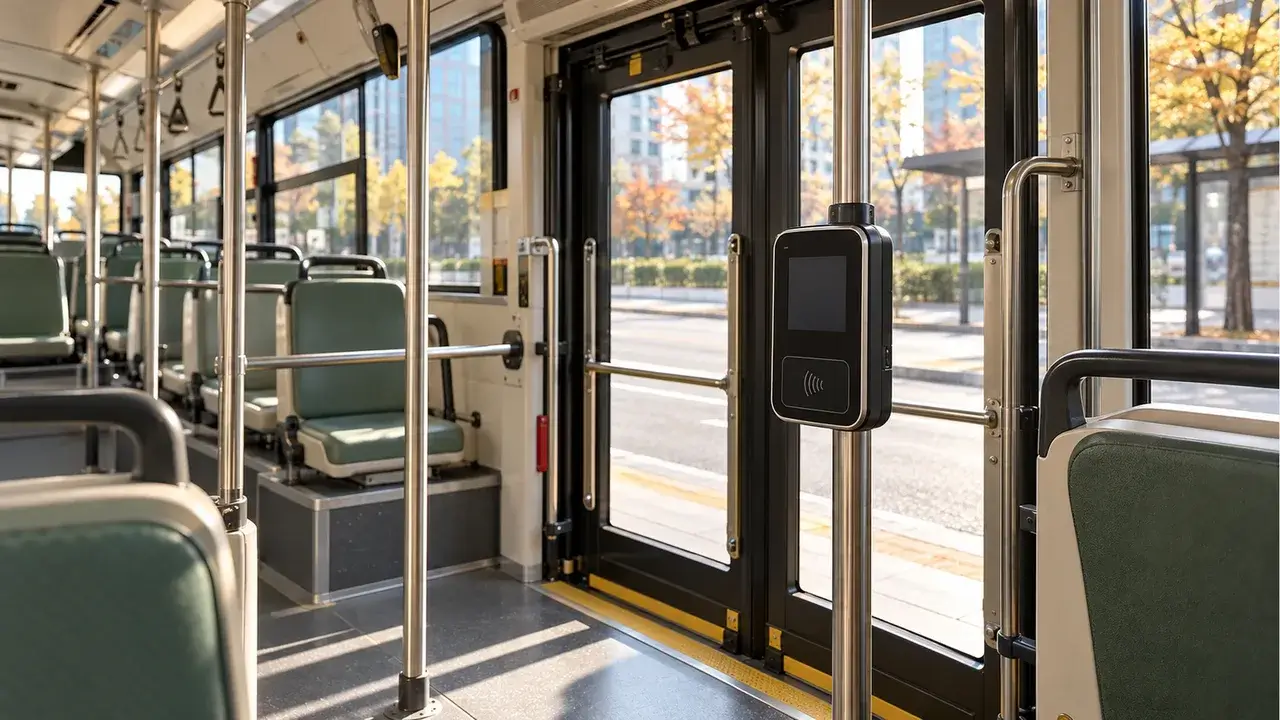
When stepping up through the front door, you will see a contactless card reader mounted right next to the driver's cabin. Simply tap your T-money card, Cashbee card, or transit-enabled credit card against the reader, just as you would when following subway etiquette. When scanned successfully, the reader emits a single beep and displays the deducted fare along with your remaining balance.
When transferring from the subway or another bus line, tapping your card at the front reader will trigger an audio announcement saying "Hwanseung-imnida" (Transfer), indicating a discounted fare. While cash is accepted, exact change may not always be available and transfer discounts do not apply, making a transit card by far the best option.
How do tap-off readers and transfer discounts work?
When your bus arrives at your destination, you must tap your transit card on the exit reader located near the rear doors before stepping off. Tapping off is not just an exit record; it is the crucial requirement for receiving the Seoul Metropolitan Transit Transfer Discount.
According to the Seoul TOPIS Metropolitan Transit Transfer Discount Guide, when transferring between buses or between a bus and the subway within 30 minutes (or within 60 minutes between 9:00 PM and 7:00 AM the next morning), you do not pay a duplicate base fare. Instead, your total fare is calculated based on cumulative distance travelled. This rule was verified on October 25, 2026.
| Situation | Korean phrase | Romanization (reading aid) | English meaning |
|---|---|---|---|
| Checking the destination | 이 버스 명동 가나요? | I beoseu Myeongdong ganayo? | Does this bus go to Myeongdong? |
| Asking about the current stop | 이번 정류장이 시청역인가요? | Ibeon jeongnyujangi Sicheongyeogingayo? | Is this stop City Hall Station? |
| Passing through passengers | 잠시만 지나갈게요 | Jamsiman jinagalgeyo | Excuse me, please let me pass |
| Signaling to alight | 이번에 내려요 | Ibeone naeryeoyo | I am getting off at this stop |
| When the card is not scanning | 카드가 잘 안 찍혀요 | Kadeuga jal an jjikhyeoyo | My card is not scanning properly |
| When you missed your stop | 다음 정류장에 내려주세요 | Daeum jeongnyujange naeryeojuseyo | Please let me off at the next stop |
| Thanking the driver | "감사합니다, 좋은 하루 되세요" | "Gamsahamnida, joeun haru doeseyo" | Thank you, have a good day |
If you exit without tapping your card, your transfer record is lost. Furthermore, because the system cannot verify your travelled distance, a maximum distance penalty will be added to your next public transport trip. Even if you do not plan to transfer, getting into the habit of tapping off every time is the safest practice.
What is the step-by-step procedure for riding a Korean bus?
Because Korean buses make relatively brief stops, remembering these five sequential steps will help you travel smoothly.
- Check your bus arrival time using shelter digital displays or map apps, and line up at the front door position as the bus arrives.
- Board through the front door, tap your transit card on the front reader, and check your remaining balance.
- Take an available seat, or if standing, firmly hold onto a handrail or hanging strap with both hands.
- When your destination stop is announced over the speaker, press the red STOP button located on the nearby wall or pole.
- After the bus comes to a complete halt, stand up, tap your card on the rear exit reader, and step down carefully.
If you are carrying heavy luggage or need direct route assistance, consult the taxi meter and receipt request guide, or contact the 1330 travel helpline for live multilingual interpretation.
When should you press the stop button before alighting?
Inside the bus, automated audio announcements broadcast upcoming stops in Korean and English. Announcements typically provide two stops consecutively, such as: "This stop is Insadong, the next stop is Anguk Station."
As soon as your destination is announced as "This stop" (Ibeon jeongnyujang), press the red "STOP" button mounted on the window pillars or handrails once. Pressing the button chimes a bell and illuminates an indicator near the driver, signaling that someone wishes to alight. If no one presses the bell and no waiting passengers are visible at the shelter, the driver may skip the stop, making this step essential.
While some local passengers walk toward the rear door while the bus is still moving, it is far safer to remain seated or hold the handrail tightly until the vehicle comes to a complete stop before moving to the exit. Once the doors open, tap your card on the reader and watch your step as you exit onto the pavement.
Frequently Asked Questions
Can I bring a disposable cup of coffee onto a Korean city bus?
No, drinks in disposable take-out cups are strictly prohibited on Korean city buses even if they have plastic lids. Sudden braking could spill hot liquid or stain other passengers. Only fully sealed thermoses, leak-proof tumblers, or unopened bottled water are permitted.
What happens if I forget to tap my transit card when getting off the bus?
If you do not tap off at the exit door, you will lose your free or discounted transfer privilege on your next trip. Furthermore, the system cannot verify your travel distance and will automatically charge a maximum penalty fare on your next ride. Always remember to tap off before exiting.
What should I do if I miss my intended bus stop?
Stay calm and politely say to the driver: 'Gisanim, naerineun goseul jinachyeosseoyo. Daeum jeongnyujangeseo naerilgeyo' (Driver, I missed my stop. I will get off at the next stop). For safety reasons, buses are strictly forbidden from opening doors outside designated bus stops, so you must wait until the next stop.
Sources & Verification Date
- Seoul Metropolitan Government city bus food and beverage restriction guide · Verified
- Seoul TOPIS metropolitan transit transfer discount guide · Verified
All materials have been verified from official announcements and may have changed since verification.