Master Korean Coin Laundromat Wash Cycles and Dryer Vocabulary
Key Takeaway
Korean 24-hour coin laundromats offer an easy way to wash and dry clothes, but the Korean machine labels can feel unfamiliar at first.
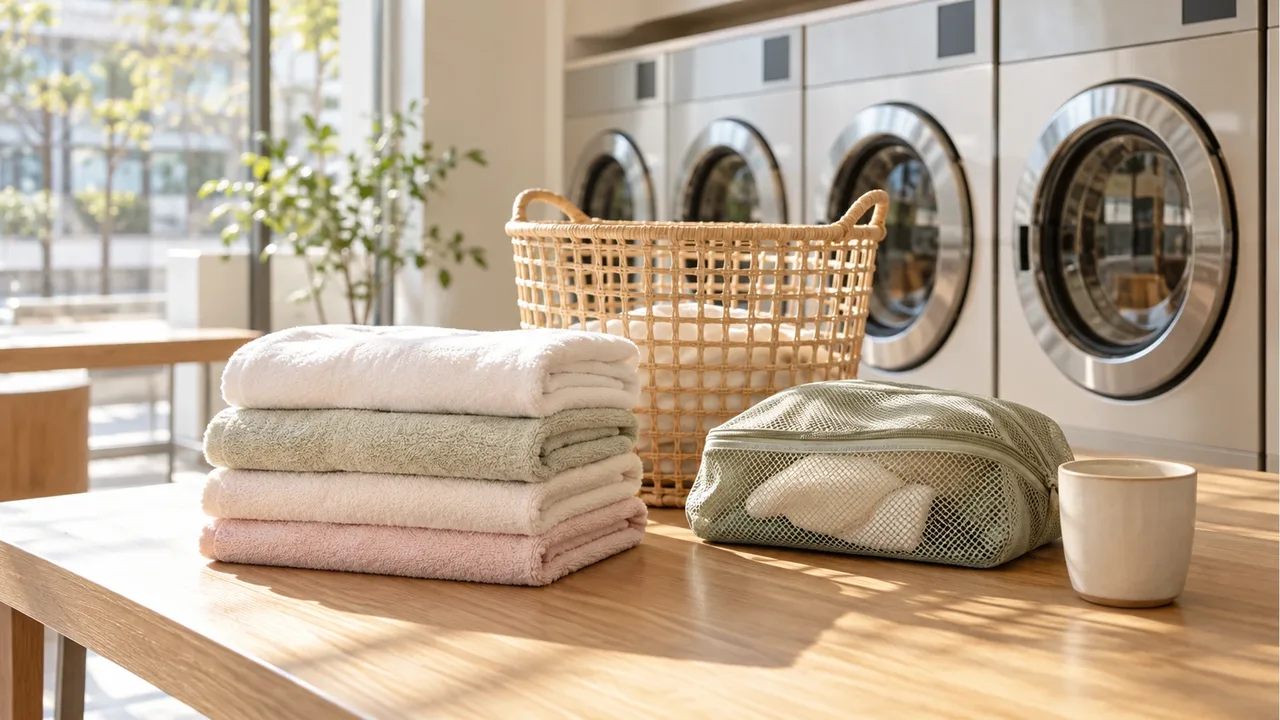
Mastering a few core words for wash cycles, dryer temperatures, and coin changers will help you complete your laundry routine smoothly in about an hour.
What essential words should you look for when entering a Korean laundromat?
Your first step upon entering a laundromat is distinguishing between washing machines and dryers. While both appliances look similar from the outside, their functions and machine labels are clearly differentiated.
Machines are grouped by load capacity into large (20kg) and extra-large (30kg) capacities, so you should choose the size that fits your laundry load comfortably.
| Korean Word | Romanization | English Meaning | Usage Tip |
|---|---|---|---|
| 세탁기 | Setakgi | Washing Machine | Large appliance for washing clothes with water and soap |
| 건조기 | Geonjogi | Clothes Dryer | Machine that dries spun clothes using circulating hot air |
| 세탁 코스 | Setak Koseu | Wash Cycle | Menu for selecting standard, warm, or fast washing methods |
| 적정 용량 | Jeokjeong Yongnyang | Recommended Capacity | Recommended fill line inside the drum (typically 70-80% full) |
| 세탁 봉투 | Setak Bongtu | Large Laundry Bag | Large plastic carry bag sold to transport clean dry clothes |
At most facilities, detergent and fabric softener are dispensed automatically by the machine. Open the washer door, load your clothes, firmly shut the heavy door, and turn the locking handle. If you spot the label '세제 자동 투입' (Automatic Detergent Injection) on the front panel, you do not need to purchase or pour in detergent manually.
Which wash cycle option should you press on the control screen?
Once your clothes are loaded and the door is secured, select your preferred wash cycle on the control panel or touchscreen. For everyday t-shirts, socks, and cotton towels, the standard cycle (표준 세탁) is the best choice.
| Korean Menu | Romanization | English Meaning | Recommended Situation |
|---|---|---|---|
| 표준 세탁 | Pyo-jun Se-tak | Standard Wash | Ideal for daily casual garments, cotton shirts, and towels |
| 온수 세탁 | On-su Se-tak | Warm Water Wash | Effective for lifting stubborn stains or oily soil with warm water |
| 쾌속 세탁 | Kwae-sok Se-tak | Quick Wash | Fast option for lightly soiled clothes or small loads |
| 헹굼 추가 | Heng-gum Chu-ga | Extra Rinse | Adds one extra freshwater rinse to wash out lingering residue |
| 탈수 | Tal-su | Spin Dry | Final spin extraction to remove excess moisture |
After selecting your cycle, the required fee will appear on the display. Insert 500-won coins one by one into the coin slot, or tap your recharged laundromat card on the contactless terminal. Once payment registers, press the start button (시작 or 동작) and the cycle runs for about 35 minutes.
How should you choose the dryer temperature to protect your fabrics?
When washing finishes, open the door, transfer the damp spun laundry into an empty dryer, and prepare to dry. Choosing the right operating temperature based on fabric care labels is essential to prevent heat damage or garment shrinkage.
| Dryer Menu | Romanization | English Meaning | Fabric Recommendations |
|---|---|---|---|
| 고온 건조 | Go-on Geon-jo | High Heat | Heavy denim, thick bath towels, and sturdy cotton bed linens |
| 중온 건조 | Jung-on Geon-jo | Medium Heat | Standard t-shirts, button-downs, and blended cotton fabrics |
| 저온 건조 | Jeo-on Geon-jo | Low Heat | Delicate synthetics, fine knits, and nylon athletic garments |
| 송풍 건조 | Song-pung Geon-jo | Air Fluff (No Heat) | Cool air tumble to remove dust or cool down warm garments |
| 일시 정지 | Il-si Jeong-ji | Pause | Pauses the tumble cycle to open the door and check dryness |
Dryers typically cost around 4,000 to 5,000 KRW for a base duration of 30 minutes, with each additional 500-won coin adding 3 to 4 minutes of run time. Shut the door, select your heat setting, insert your coins or tap your card, and press the start button (시작) to initiate tumbling.
What helpful terms are used on vending machines and coin changers?
If you only have paper currency, look for the coin changer (동전교환기) located along the wall to get 500-won coins. Automated vending machines selling dryer sheets and large plastic laundry bags are usually placed right beside the coin machine.
| Facility / Item | Romanization | English Meaning | Description and Tips |
|---|---|---|---|
| 동전교환기 | Dong-jeon Gyo-hwan-gi | Coin Changer | Unmanned machine exchanging paper bills into 500-won coins |
| 바운스 / 다우니 | Ba-un-seu / Da-u-ni | Dryer Sheet | Scented fabric softener sheet preventing static electricity |
| 세탁 카드 충전기 | Setak Kadeu Chungjeongi | Laundry Card Kiosk | Smart card dispenser and reload terminal accepting bank cards |
| 반환구 | Ban-hwan-gu | Return Slot | Tray where rejected coins or leftover change drop down |
If you purchase dryer sheets, toss 1 or 2 unfolded sheets directly into the dryer drum alongside your damp laundry before starting the cycle.
What basic etiquette and safety precautions should you observe?
Because coin laundromats are shared, unattended public facilities, following basic community rules ensures safety and convenience for all patrons.
- Check restricted items: Pet bedding with loose fur, grease-soaked workwear, and outdoor shoes must never be placed into standard washing machines. If available, use the designated sneaker washer instead.
- Be punctual at cycle completion: Machines signal completion on their screens. To prevent other waiting customers from having to remove your clothes into laundry bins, return to the store 5 minutes before your timer finishes.
- Check pockets thoroughly: Inspect all pockets for coins, cigarette lighters, paper tissues, and lip balms before loading. Lighters pose a fire hazard under high heat, while paper tissues disintegrate and cling to fabric.
- No food or smoking: To maintain a pristine, clean environment for fresh laundry, avoid eating crumbly snacks and remember that smoking is strictly prohibited indoors.
Knowing these practical terms and operating steps will help you enjoy fresh, clean laundry effortlessly wherever your travels take you across Korea.
Frequently Asked Questions
Do I need to buy detergent and fabric softener separately at a Korean coin laundromat?
Most modern Korean self-service laundromats feature automatic detergent and softener dispensing built directly into the commercial washers. Once you select your cycle and pay, the machine automatically injects liquid detergent and fabric softener at the appropriate washing and rinsing stages. If you see the sign '세제/유연제 자동투입' (Auto Detergent Dispensed) on the machine front, you do not need to add any detergent.
How can I pay if I only have bank cards and no 500-won coins?
You can insert 1,000, 5,000, or 10,000 won paper bills into the on-site coin changer (동전교환기) to get 500-won coins. Alternatively, many laundromats have a central card kiosk where you can purchase or recharge a dedicated laundromat smart card using your international or local credit/debit card, then simply tap the card reader on each machine.
Why do people purchase bounce dryer sheets from the vending machine?
Bounce sheets (dryer sheets) prevent static electricity and add a refreshing scent to your clothes during high-heat tumbling. Simply buy a packet containing 1 or 2 dryer sheets from the vending machine and toss them unfolded into the dryer drum alongside your damp clothes before starting the dryer.
Sources & Verification Date
- Korea Tourism Organization VisitKorea traveler living amenities guide · Verified
- National Institute of Korean Language basic everyday laundry vocabulary guide · Verified
- Korea Consumer Agency self-service laundromat consumer guidelines and precautions · Verified
All materials have been verified from official announcements and may have changed since verification.