Learn Korean Thank-You Expressions and Polite Speech Nuances by Situation
This page contains Coupang Partners affiliate links; the operator may earn a commission.
Key Takeaway
The all-purpose key to thanking someone safely and politely in Korean is the combination of "gamsahaeyo" and a slight bow.
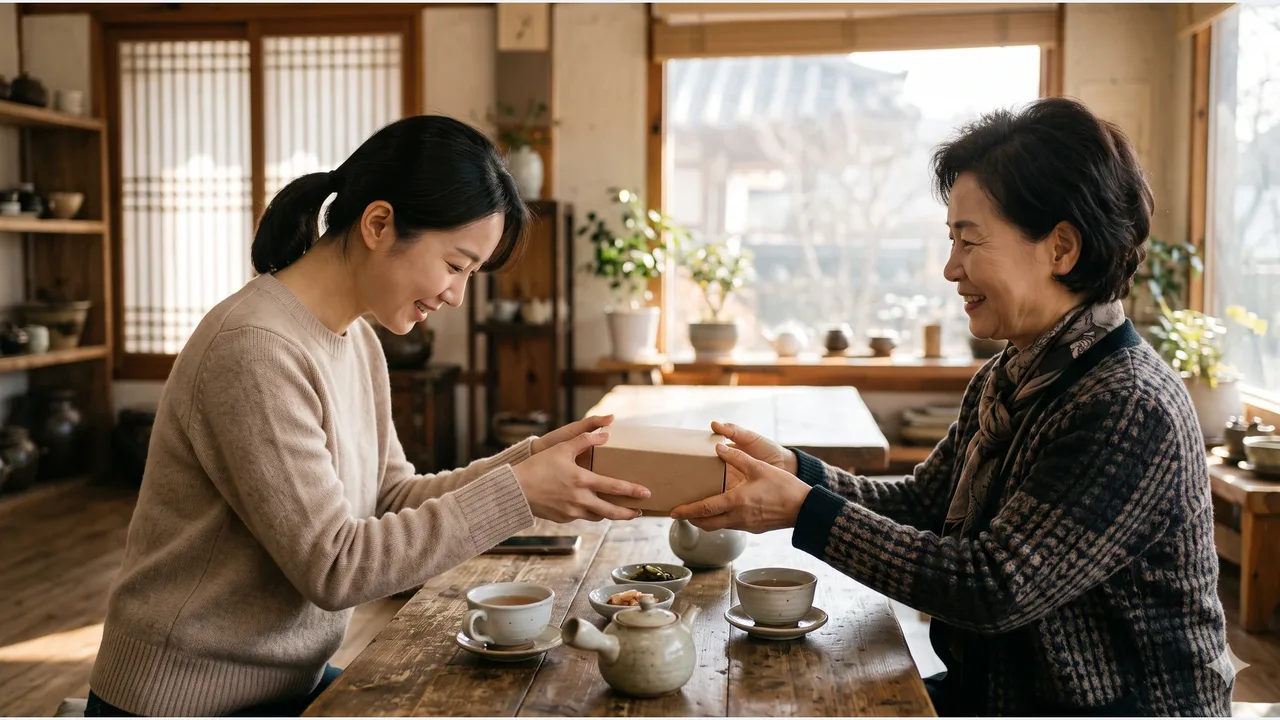
Korean has a carefully developed system of honorifics (polite speech and casual speech) that depends on the other person's age, social status, and closeness. It is hard for a learner to master the whole grammar system at once, but you can win a lot of praise just by telling three or four thank-you expressions apart and using them in the right situations.
How do thank-you expressions change depending on the person?
The most basic standard polite expressions are "gamsahaeyo" and "gomawoyo". It is safe to always use these with every stranger, older person, or coworker you meet in daily life, such as in shops, restaurants, hotels, and on the street.
"Gomawo", on the other hand, is a friendly casual form used only with friends your own age, young children, or people you are especially close to. Saying "gomawo" to an older person or a local you have just met can create an awkward situation, so be careful.
| Expression | Politeness level | Main users and situations |
|---|---|---|
| Jeongmal gamsahaeyo | Very Polite | When you got deep help, formal settings, older people |
| Gamsahaeyo / Gomawoyo | Polite | Restaurants, taxis, cafes, strangers on the street, everyday use overall |
| Gomawoyo | Soft Polite | Coworkers you have grown close to, someone slightly younger than you |
| Gomawo | Casual | Close friends your age, young children, family |
| Daedanhi gamsahaeyo | Formal | Presentations, official business letters, speeches |
What modifiers make your thanks richer?
When a plain "gamsahamnida" feels like too little, add the adverb "jeongmal" (really) or "jinsimeuro" (sincerely) in front. If you add a specific reason, as in "Jeongmal gamsahamnida" or "Dowajusyeoseo gamsahamnida" (thank you for helping), it warms the listener's heart even more.
When you receive a small favor or service, it is also a great idea to use situation-specific phrases of thanks such as "Jal meokgetseumnida" (I will eat well) and "Jal sseugetseumnida" (I will make good use of it).
What mistakes should you avoid when talking with Koreans?
Remember that you cannot use one expression for everyone regardless of age, the way English uses "Thank you." When you are unsure, choosing the most polite level of speech (the haeyo-che and hasipsio-che speech levels) is the best way to avoid mistakes.
Key Korean Words and Sentences
Learn the thank-you expressions and key pronunciations that let you express your feelings in many situations.
1. Essential Vocabulary
- Gamsa: Gratitude, Thanks / a feeling of being grateful
- Doum: Help, Assistance / something that is of use
- Chingu: Friend / someone you are close to
- Jeongmal: Really, Truly / genuinely, without a lie
- Seonmul: Gift, Present / something given with affection
2. Practical Sentences
| Pronunciation (Romanization) | Meaning in English | Audio |
|---|---|---|
| "Dowajusyeoseo jeongmal gamsahamnida" | Thank you so much for your help | <button type="button" class="tts-btn" data-tts="도와주셔서 정말 감사합니다">🔊 Listen</button> |
| "Ttatteuthage hwandaehae jusyeoseo gamsahaeyo" | Thank you for your warm hospitality | <button type="button" class="tts-btn" data-tts="따뜻하게 환대해 주셔서 감사해요">🔊 Listen</button> |
| "Chinjeolhage allyeojusyeoseo gomapseumnida" | Thank you for kindly letting me know | <button type="button" class="tts-btn" data-tts="친절하게 알려주셔서 고맙습니다">🔊 Listen</button> |
| "Deokbune jal haegyeol-doe-eosseoyo, gamsahaeyo" | Thanks to you, it was resolved well. Thank you | <button type="button" class="tts-btn" data-tts="덕분에 잘 해결되었어요, 감사해요">🔊 Listen</button> |
3. Recommended Video Guide
We recommend the lessons on the nuances of Korean honorifics offered in the National Institute of Korean Language's multicultural Korean education content and the official King Sejong Institute videos. See visually how polite speech and the bowing gesture work together naturally.
Frequently Asked Questions
Which is more polite, "gomapseumnida" or "gamsahamnida"?
Both are standard expressions and high-level polite speech for thanking someone courteously. Traditionally "gomawoyo" is a native Korean word and "gamsahaeyo" is Sino-Korean (from Hanja), and both are used freely in formal occasions and in daily life.
Does it come across as rude if a foreigner I just met says "gomawo" in casual speech?
People know that foreigners are not fluent in Korean, so most will take it with a smile. But with formal relationships or older people, using "gamsahaeyo" leaves a much better impression.
What body language or gestures should I use when I thank someone?
Make eye contact and add a slight bow of the head (bending at the waist about 15 to 30 degrees). It adds sincerity and respect to your words and leaves a very good impression.
Sources & Verification Date
- National Institute of Korean Language, Standard language etiquette: norms for thanks and greetings · Verified
- National Institute of Korean Language, Basic Korean Dictionary: notes on everyday greeting expressions · Verified
All materials have been verified from official announcements and may have changed since verification.